Heated bees

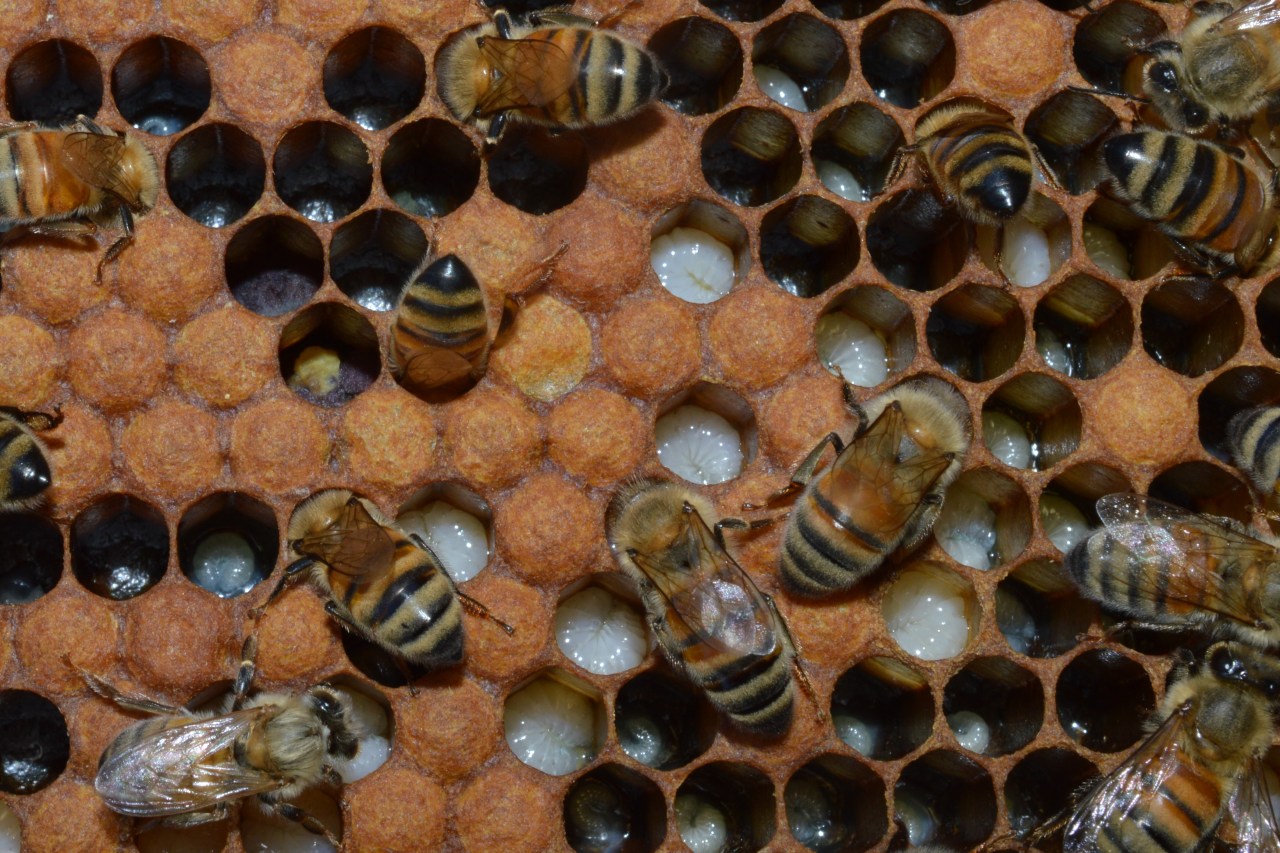
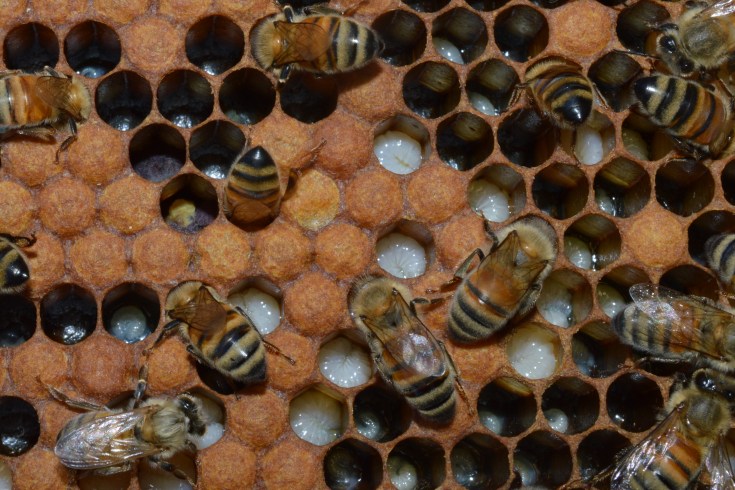
This semester, I am a teaching assistant for Tufts University’sExperiments in Ecology (a.k.a. BIO 51). BIO 51 is a team taught class where undergraduate students learn about three different study systems, and design their own experiments. This semester’s study systems are honey bees, snails, and tea. The honey bee unit is led by my adviser […]
Read more

Two queens?!

Last week, I tweeted that one of my newly installed observation hives had two queens. Unfortunately, I only have these not-so-great-quality-phone-through-Plexiglas photos. But, you can see that one queen has a fading, white paint mark on her back, and the other does not. How can this be? Each hive is only supposed to have one […]

Read more

Have you seen this pollen?

While I was in Exeter, UK for theInternational Society for Behavioral Ecology (ISBE), I got a message from my two interns: the bees looked sick. In five of our eight observation hives, some of the worker bees had white dots stuck to their back. Even one of the queens had it! The only thing I […]

Read more

Organized chaos

Everyone knows that bees are busy. Many know that their hives work like a well-oiled machine. But did you know that a bee’s life is basically organized chaos? Take this video for example. Slowed down to ¼ the speed, these foragers aren’t as graceful as they first appear. At the beginning of the video, a […]

Read more

Back to the drawing board

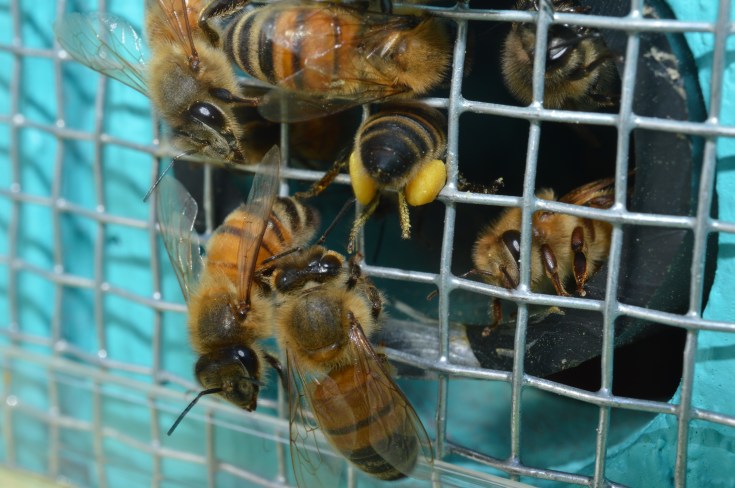
My interns (James and Joanna) and I recently installed pollen traps on our observation hive at Tufts University. We installed the pollen traps to control which amino acids our bees eat. Since pollen is basically the bees’ only source of amino acids (there are small amounts of amino acids in nectar), pollen traps allow us […]

Read more

The Installation.

This year marks my first bee installation! Although I have been studying and keeping bees for about 3 years now, I had only worked with observation hives. I don’t actually install the bees in the observation hives—I bring empty observation hives to our bee guy (Rick Reault, owner of New England Beekeeping). Then, Rick installs […]

Read more

The Starks Lab is ready for Tour de Hives 2016!

As some of you may have seen on Facebook, the Starks Lab “bee huts” got a serious facelift this summer. During the first week of the Tufts University Research Experience for Undergraduates (REU) Program, we were landscapers, painters, and carpenters—and it was a blast! Although I am a field biologist, I can honestly say that […]

Read more

Things that live in bee hives (other than bees)

Of course bees live in bee hives. When a managed Langstroth hive is abandoned by its bee inhabitants however, it becomes a nice home for a few other animals. An abandoned bee hive is a wonderful home for mice. This is particularly true in the wintertime (it’s warm). Thus, in the winter, many beekeepers put […]

Read more

Das ist cool

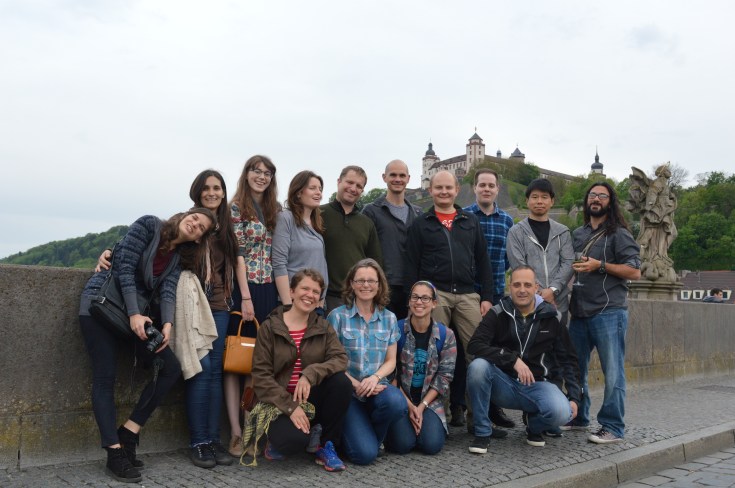
Last week, I was lucky enough participate in the first ever Plant and Pollen Metabarcoding Workshop at the University of Würzburg in Würzburg, Germany. The workshop was organized and led by Dr. Alexander Keller. In addition to Alex, we had two amazing teachers: Wiebke Sickel (PhD student, teacher for the lab portion), and Markus Ankenbrand […]

Read more

The Bee Box

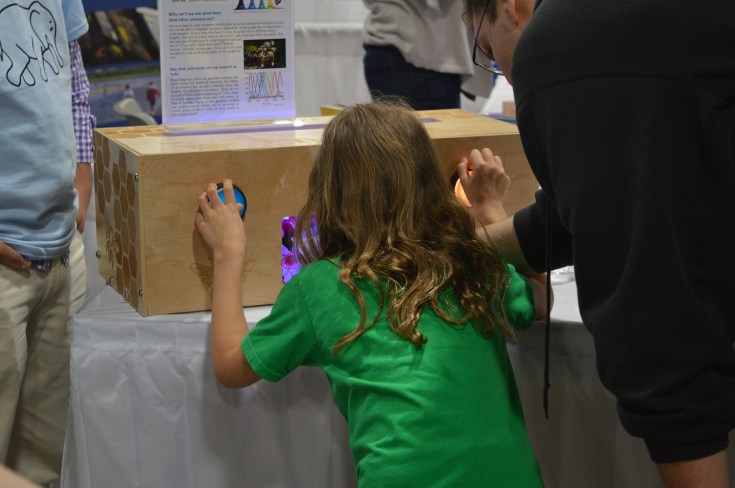
Last weekend, I was a part of the Tufts University Biology Union of Graduate Students (BUGS) booth at the USA Science and Engineering Festival. The theme of our booth was “Life is Communication.” To prepare for the festival (we started preparing about a year ago), we formed committees to create various interactive activities to showcase. […]

Read more